Column · @charlienugo560
Healing Real Estate as Part of Drug Addiction Treatment in Ohio
Recovery housing occupies a practical, often misunderstood place in drug addiction treatment. It is not detox. It is not the same as residential treatment. It is not simply a place to sleep after discharge. In Ohio, recovery housing is recognized as one part of a broader continuum of care for opioid and co-occurring drug addiction, alongside services such as detoxification, outpatient treatment, medication-assisted treatment, peer support, residential services, and multiple pathways to recovery.
That distinction matters. People rarely recover from drug addiction because of one appointment, one medication, one group session, or one brief stay in a treatment facility. Treatment may begin with medical stabilization, but recovery has to survive ordinary life: waking up without substances in the home, getting to appointments, rebuilding trust, managing cravings, finding work or returning to school, and learning how to live through stress without returning to use. Recovery housing can help create the conditions where those changes become more likely to last.
Ohio has had to think seriously about this issue because substance use disorder has touched every type of community in the state. Urban neighborhoods, small towns, college communities, suburbs, and rural counties have all felt the effects of opioid addiction and other forms of drug addiction. The need is not only for more treatment beds or more outpatient appointments. The need is for a coordinated system that helps people move from crisis to stability, and from stability to a life that can be maintained.
Where recovery housing fits in Ohio’s continuum of care
Ohio law calls for a community-based continuum of care for opioid and co-occurring drug addiction. That continuum includes ambulatory and sub-acute detoxification, non-intensive and intensive outpatient services, medication-assisted treatment, peer support, residential services, recovery housing, and multiple pathways to recovery.
Those words can sound administrative, but they describe a real sequence many families recognize. A person may first need detoxification because stopping suddenly is unsafe or unmanageable. They may then need residential treatment or inpatient rehab, where daily structure and clinical care help them stabilize. After that, outpatient care may continue for weeks or months. Medication-assisted treatment may be appropriate for some people, especially where opioid Addiction Treatment in Ohio use disorder is involved. Peer support may provide the kind of lived-experience guidance that clinical services alone cannot always offer.
Recovery housing fits into this pattern by addressing a specific problem: what happens when someone is no longer in a controlled treatment environment but is not yet ready to return to the same home, neighborhood, relationship pattern, or daily routine that surrounded active substance use.
For many people, the period after residential treatment or detox is risky. The person may feel physically better and emotionally hopeful, but their recovery skills are still new. They may return to a household where other people use drugs or alcohol. They may have strained family relationships, unresolved legal or financial stress, or no consistent transportation to treatment. They may not yet trust themselves in unstructured time. Recovery housing can reduce some of that pressure by offering a sober living environment connected to expectations, accountability, and continued engagement in recovery.
It is important not to oversell it. Recovery housing does not replace clinical drug addiction treatment. It does not provide the same level of medical oversight as detox or residential care. It is not right for every person at every point in recovery. But for the right person at the right time, it can be the bridge between treatment and independent living.
The difference between treatment and a recovery residence
Families often use treatment-related terms interchangeably because they are trying to solve an urgent problem. “Rehab,” “detox,” “inpatient,” “sober living,” and “recovery housing” may all get folded into one conversation. In practice, those settings serve different purposes.
Detoxification focuses on withdrawal and medical stabilization. Residential or inpatient treatment provides a structured clinical setting where therapy, group work, medication support when appropriate, and other services may occur. Outpatient treatment allows someone to live outside the treatment setting while attending scheduled care. Intensive outpatient services involve a higher level of time and structure than non-intensive outpatient care. Medication-assisted treatment uses approved medications, combined with appropriate support, for certain substance use disorders.
Recovery housing is different. Its main role is the living environment. A person in recovery housing may still attend outpatient treatment, receive medication-assisted treatment, participate in peer support, or continue therapy. The home itself supports recovery by creating a setting where substance use is not part of daily life and where residents are expected to live in a way that supports sobriety.
That separation can be helpful. Treatment teaches and reinforces recovery tools. Housing gives those tools a place to be practiced. Someone may learn relapse prevention planning in outpatient care, then come home to a recovery residence where the evening routine supports that plan instead of undermining it. Someone may work with a therapist on emotional regulation, then have to apply those skills after a difficult phone call, a job rejection, or a family conflict. Recovery housing does not remove life’s stressors. It can make those stressors less likely to become immediate relapse events.
The trade-off is that recovery housing requires willingness. A person usually has more freedom than in residential treatment, which means more responsibility. If someone needs 24-hour clinical care, acute psychiatric stabilization, or medically supervised withdrawal, a recovery residence alone would not be enough. When someone is medically stable but still needs structure, recovery housing may make more sense.
Why housing can determine whether treatment gains hold
One of the most common frustrations in addiction care is watching someone do well in treatment and then struggle almost immediately after leaving. This does not mean treatment failed. It often means the person stepped from a highly structured environment into a highly unstable one.
Drug addiction changes routines, relationships, sleep patterns, decision-making, and stress responses. Treatment begins the process of repair, but early recovery is still fragile. People may have to distance themselves from familiar contacts, rebuild daily discipline, and tolerate discomfort without using substances. If the home environment is chaotic, unsafe, or closely tied to prior drug use, the person may be fighting an uphill battle from the first night back.
Recovery housing can support continuity in several concrete ways. It can give a person a substance-free place to return to after outpatient sessions. It can place them around others who are also working on recovery. It can provide expectations around daily conduct. It can reduce isolation, which is a major issue after treatment. It can make it easier to keep appointments because recovery is part of the daily culture rather than an isolated event on a calendar.
Consider a person leaving residential treatment after several weeks. During treatment, meals, groups, therapy sessions, and sleep schedules may have been organized for them. After discharge, they may suddenly be expected to manage everything alone. If they return to an apartment where rent is overdue, old contacts are nearby, and no one in the household understands recovery, the adjustment can be severe. Recovery housing does not solve every problem, but it may create a safer middle stage while the person builds enough stability to live independently.
The same can be true for someone stepping down from a higher level of care into outpatient treatment. Outpatient services can be effective, but they depend on the person showing up, staying engaged, and avoiding high-risk situations between sessions. Recovery housing can reinforce that engagement by making treatment participation part of a broader recovery plan.
Ohio’s certification environment and why it matters
Ohio requires substance use disorder treatment providers to be certified by the Ohio Department of Mental Health and Addiction Services under state law. This point matters for families and individuals trying to sort through options. Addiction treatment involves vulnerable people, serious health risks, and complicated decisions about care. Certification is one way the state establishes standards for providers that deliver treatment.
Recovery housing should be understood in relation to that broader system. The safest planning happens when people know what type of service they are entering and whether it is clinical treatment, housing support, or a combination of services connected through a continuum. A treatment provider and a recovery residence may work in coordination, but they are not automatically the same thing.
For a person seeking drug addiction treatment in Ohio, this means asking direct questions. Is the service clinical treatment, recovery housing, or both? If treatment is being offered, is the provider certified as required? What level of care is being recommended, and why? Is detox necessary before admission? Will outpatient treatment continue while living in recovery housing? How are medication-assisted treatment needs handled?
Those questions are not signs of mistrust. They are signs of informed decision-making. Families often feel pressured to move quickly, especially after an overdose, an arrest, a hospital visit, or a painful family confrontation. Urgency is real, but clarity still matters. The wrong placement can delay care. The right placement can reduce chaos and help the person engage in the level of support they actually need.
Medication-assisted treatment and recovery housing
Medication-assisted treatment is part of Ohio’s recognized continuum of care for opioid and co-occurring drug addiction. In practice, this can be a critical issue when considering recovery housing. Some people in recovery use medication as part of their treatment plan, and housing should not be evaluated through outdated assumptions that treat all medication use as incompatible with recovery.
Drug addiction treatment has changed over time because the field has learned more about opioid use disorder, relapse risk, overdose risk, and long-term recovery. Medication-assisted treatment can be an appropriate part of care for some individuals. A recovery plan may include medication, therapy, peer support, and stable housing. The presence of medication does not erase the need for accountability, and accountability does not require ignoring medical care.
The practical concern is coordination. If someone is receiving medication-assisted treatment, they need a housing environment that supports appointment attendance, medication adherence, and communication with treatment professionals when appropriate. They also need clear expectations. Confusion around medication policies can create stress at exactly the wrong time.
This is one reason recovery housing should be discussed before discharge from a higher level of care whenever possible. A person leaving detox or residential treatment may have momentum. If housing questions are left unresolved until the last day, families may scramble. When recovery housing, outpatient care, medication-assisted treatment, and peer support are coordinated early, the transition is less likely to depend on luck.
The role of peer support and multiple pathways
Ohio’s continuum recognizes peer support and multiple pathways to recovery. That recognition reflects something people in the field see repeatedly: recovery does not look identical for everyone.
Some people connect strongly with peer-led recovery communities. Others rely heavily on therapy and family support. Some need medication-assisted treatment. Some benefit from residential care before outpatient care. Some people respond well to structured routines, while others need flexibility because of employment, parenting, or medical needs. Recovery housing can support different pathways, but it works best when it respects the person’s actual clinical and recovery needs rather than forcing a one-size-fits-all model.
Peer support can be especially powerful in a recovery housing context. A person who has never experienced addiction may offer compassion and clinical skill, but someone with lived experience can often say, “I know what that kind of craving feels like at 9 p.m. When everyone else thinks the day is over.” That kind of recognition can interrupt shame. It can also challenge excuses in a way that feels credible.
Still, peer support is not a replacement for clinical care. Depression, trauma, anxiety, and other co-occurring concerns may require professional treatment. Ohio’s continuum specifically refers to opioid and co-occurring drug addiction, which acknowledges that substance use often appears alongside mental health symptoms or other drug use patterns. Recovery housing may provide daily support, but people with co-occurring needs often require coordinated treatment beyond housing.
What a strong transition plan usually addresses
A transition into recovery housing should not be treated as a single move-in date. It should be part of a care plan that accounts for clinical needs, recovery supports, daily functioning, and safety. The details vary from person to person, but a thoughtful plan usually addresses a few core areas.
- The current level of care and whether detox, residential treatment, or outpatient services are clinically appropriate.
- The person’s medication needs, including whether medication-assisted treatment is part of the recovery plan.
- The recovery housing environment, including expectations, structure, and compatibility with the person’s needs.
- Ongoing therapy, peer support, family involvement, or other recovery supports after move-in.
- Practical barriers such as transportation, employment schedule, court obligations, childcare, or medical appointments.
Each of these areas can become a relapse risk if ignored. Transportation may sound minor compared with cravings or withdrawal, but missed appointments can unravel progress. Family involvement can be a source of healing or conflict, depending on boundaries and timing. Employment can build confidence, but too much pressure too early can overwhelm someone who is still stabilizing.
A good plan is neither permissive nor punitive. It recognizes that recovery requires personal responsibility, while also recognizing that early recovery is a vulnerable medical and behavioral health period. The plan should be realistic enough that the person can follow it on a bad day, not only on a motivated day.
Recovery housing after detox or residential treatment
Detox and residential treatment often create the first real pause in active drug use. In Ohio, detoxification and residential services are both part of the broader continuum. For some people, this first pause is lifesaving. Yet detox by itself is not the same as sustained recovery. Once withdrawal is managed, the person still has to address behavior patterns, cravings, triggers, mental health symptoms, relationships, and the daily structure of life.
Residential or inpatient treatment can provide more time for that work. A facility may offer therapies such as cognitive behavioral therapy, dialectical behavior therapy, trauma-focused approaches, individual counseling, group therapy, family or couples therapy, and medication-assisted treatment when appropriate. Some programs also offer supportive services that address wellness and emotional regulation, such as mindfulness-based activities, nutrition education, fitness, art-based services, or other holistic supports. The exact services depend on the provider and the individual treatment plan.
Recreate Behavioral Health’s Ohio location, Recreate Behavioral Health of Ohio, is in Gahanna, just outside Columbus. The organization describes its Ohio facility as offering detox, residential or inpatient rehab, and outpatient treatment, with a full continuum of care and primary mental health services in a residential treatment setting. It also states that treatment may include CBT, DBT, EMDR, medication-assisted treatment, individual therapy, group therapy, family therapy, and couples therapy, along with holistic supports such as yoga or mindfulness, art therapy, adventure therapy, equine therapy, Reiki, acupuncture, chiropractic care, fitness and wellness activities, and nutrition education.
That kind of continuum is relevant because recovery housing works best when it is not isolated from care. A person leaving residential treatment may still need outpatient treatment. A person with trauma symptoms may still need therapy. A person with opioid use disorder may still need medication-assisted treatment. A person with family strain may benefit from carefully timed family involvement. Housing can support the plan, but it should not be mistaken for the whole plan.
The most effective discharge conversations tend to be concrete. Where will the person sleep on the first night after discharge? What appointment is already scheduled? Who knows the plan? What happens if cravings spike? What supports are available outside business hours? If recovery housing is part of the plan, when does the person move in, what are the expectations, and how does the housing arrangement coordinate with ongoing treatment?
Outpatient treatment while living in recovery housing
Outpatient treatment is one of the most important companions to recovery housing. A person may live in a sober environment and still need clinical care several days a week. Another person may need less frequent outpatient services but benefit from ongoing therapy, medication management, or peer support. Ohio’s continuum includes both non-intensive and intensive outpatient services, which reflects the fact that outpatient care exists at different levels of structure.
Living in recovery housing while attending outpatient treatment can help close the gap between clinical insight and daily behavior. In therapy, a person may identify patterns such as avoiding conflict, isolating after shame, or returning to drug use after payday. In a recovery residence, those patterns may surface in real time. The person has to decide how to spend evenings, how to handle frustration with house expectations, how to respond when someone from the past reaches out, and how to manage ordinary boredom.
Outpatient care can then process those situations while they are fresh. Instead of speaking only in generalities, the person can bring in real events from the week. “I wanted to leave the house after an argument.” “I felt embarrassed asking for help.” “I skipped a meeting because I thought I had it handled.” These moments are not failures if they are addressed early. They are the raw material of recovery.
The risk is assuming that housing alone will provide enough support because the person looks better. Early improvement can be misleading. Sleep returns. Appetite improves. The face looks healthier. Family members feel hopeful. The person may speak with confidence. Those are meaningful signs, but they do not eliminate the need for continued care. Drug addiction is not only a physical crisis. It is also a behavioral, emotional, social, and often psychiatric condition. Outpatient treatment helps keep recovery active after the most visible crisis has passed.
When recovery housing may not be enough
Recovery housing has limits. A person in acute withdrawal may need detoxification rather than a recovery residence. A person with severe psychiatric symptoms may need a higher level of mental health care. Someone who cannot maintain basic safety may need residential or inpatient treatment. Someone who repeatedly leaves structured settings may need a reassessment of motivation, barriers, co-occurring symptoms, or the level of care.
There are also cases where recovery housing is helpful but not sufficient unless other needs are addressed. If someone has untreated trauma, housing stability may reduce exposure to triggers, but therapy may still be necessary. If someone is using opioids and has a high relapse risk, medication-assisted treatment may be a key part of the plan. If family conflict is intense, moving into recovery housing may create space, but the family system may still need guidance. If legal obligations exist, the recovery plan may need to account for court dates, reporting requirements, or documentation.
It is also possible for a recovery housing placement to be a poor fit. A person may need a different level of structure. The location may create transportation barriers. The house culture may not match the person’s recovery pathway. Expectations may be unclear. These problems should not automatically be interpreted as the person “not wanting recovery.” Sometimes they indicate that the plan needs adjustment.
At the same time, discomfort is not always a sign of a bad fit. Early recovery often feels restrictive because active addiction trains people to resist accountability. Curfews, expectations, shared living, and daily structure can feel frustrating. The clinical question is whether the discomfort is productive and manageable, or whether the placement is genuinely mismatched to the person’s needs.
Safe prescribing, monitoring, and the broader Ohio system
Ohio’s OARRS drug-monitoring system is the statewide electronic database for controlled-substance dispensing information. It supports safe prescribing and helps connect people at risk of substance use disorder to resources. While recovery housing is not a prescribing system, it exists within the same broader public health landscape.
Controlled substances, pain treatment, psychiatric medication, and addiction risk can intersect in complicated ways. A person in recovery may have legitimate medical needs. Another person may have a history of misuse involving prescribed medications. A prescriber may need accurate information to make safe decisions. OARRS helps support those decisions at the system level.
For individuals in recovery housing, medication questions should be handled carefully and respectfully. Recovery does not mean ignoring pain, psychiatric symptoms, or other medical conditions. It also does not mean casual or unmonitored use of controlled substances. The best approach is coordinated care, clear communication, and treatment decisions made by qualified professionals.
Families sometimes want simple rules: no medications, or medications solve everything. Neither extreme is reliable. Drug addiction treatment requires nuance. The right medication for one person may be inappropriate for another. A recovery housing plan should support medical care without becoming careless about risk.
Questions families should ask before choosing recovery housing
Families often begin searching for recovery housing under pressure. They may be exhausted, frightened, and unsure whom to trust. The following questions can help slow the process enough to make a more informed decision.
- What level of care has been recommended by a qualified treatment professional, and does recovery housing match that recommendation?
- Will the person continue outpatient treatment, medication-assisted treatment, therapy, or peer support while living there?
- What are the expectations for residents, including substance use, attendance, daily responsibilities, and conduct?
- How does the residence respond if someone relapses or begins missing treatment appointments?
- Is the housing arrangement connected to certified treatment services when clinical care is being provided?
The answers do not need to be complicated, but they should be clear. Vague reassurances are not enough when someone’s recovery and safety are at stake. A credible provider or residence should be able to explain what it does, what it does not do, and how it fits into the person’s broader plan.
It is also worth asking whether the person seeking help understands the plan. Families sometimes arrange everything around the individual, hoping momentum will carry them forward. Logistics matter, but engagement matters too. A person does not need perfect motivation, and many people enter treatment ambivalent. Still, they should know what is being asked of them and why recovery housing is being considered.
The family’s role without taking over
Family members can help or unintentionally interfere. That is not a criticism. Addiction places families under chronic stress. Parents, spouses, siblings, and adult children may have spent years responding to crises. They may have paid bills, answered late-night calls, searched for missing loved ones, or lived with fear of overdose. When treatment begins, they may want to control every detail because control feels safer than uncertainty.
Recovery housing can create healthier distance. The person in recovery has a place to live that is not dependent on immediate family rescue. The family can support treatment without managing every meal, ride, argument, or mood shift. This separation can feel uncomfortable at first, especially when families are used to measuring safety by physical proximity. Yet proximity is not always the same as recovery support.
Helpful family involvement usually means staying informed, respecting the treatment plan, participating in family therapy when appropriate, and maintaining boundaries. It may mean refusing to provide money that could destabilize recovery while still offering encouragement. It may mean allowing natural consequences while staying emotionally present. These choices are difficult. They are easier when families receive guidance rather than improvising from fear.
Family therapy or couples therapy may be part of treatment in some settings. When available and clinically appropriate, that work inpatient drug treatment can help relatives move out of crisis roles. It can also help the person in recovery take responsibility without being permanently defined by past behavior.
Recovery housing and the long middle of recovery
Early recovery gets a lot of attention because it is urgent. Overdose risk, withdrawal, detox, admissions, and discharge planning all demand immediate action. But the middle stage of recovery is where many people quietly build a life.
This is the stage where someone learns to get through a normal Tuesday. They wake up, go to work or look for work, attend treatment, manage money, eat something decent, respond to stress, and go to bed without using. That may sound ordinary, but for a person recovering from drug addiction, ordinary life can be a major achievement. Recovery housing can support that achievement by making healthy repetition more likely.
The work is not glamorous. It involves chores, schedules, appointments, honest conversations, frustration, and patience. It may involve repairing credit, replacing identification documents, addressing dental or medical needs, responding to legal problems, or learning how to be bored without panic. These details rarely appear in dramatic stories about addiction, but they often determine whether recovery becomes sustainable.
A person may stay in recovery housing for a period that matches their needs and circumstances. The exact timing should depend on stability, progress, treatment engagement, and readiness for more independence. Moving out too soon can expose someone to avoidable risk. Staying too long without growth can create dependence on structure. The goal is not simply to remain housed in recovery forever. The goal is to use the housing environment to practice the skills needed for a stable, substance-free life.
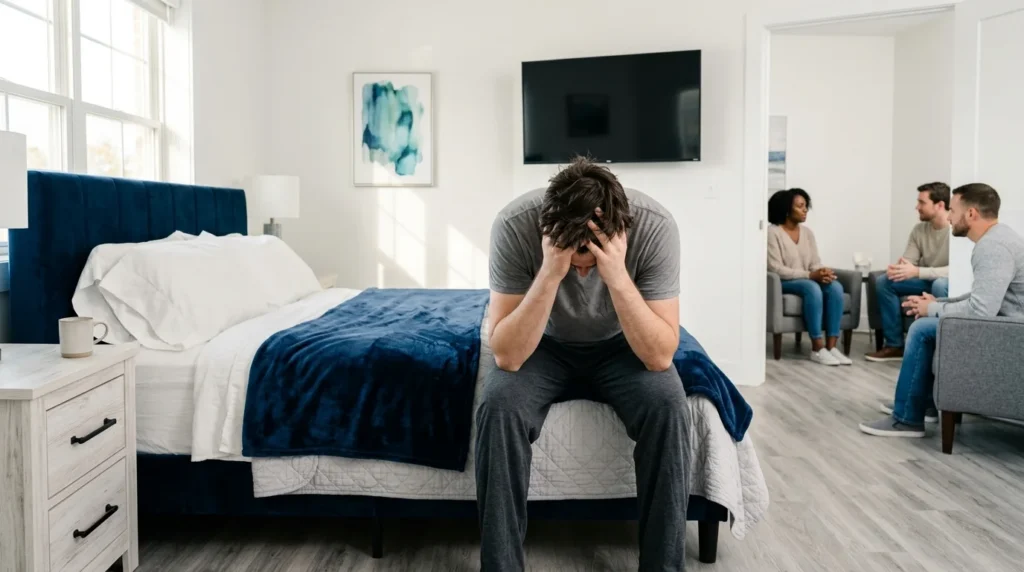
A practical place in a larger treatment system
Recovery housing deserves respect because it addresses a problem clinical treatment cannot solve by itself: the environment a person returns to after care. Ohio’s continuum recognizes that drug addiction treatment must include more than one doorway and more than one level of support. Detoxification, residential services, outpatient care, medication-assisted treatment, peer support, recovery housing, and multiple pathways all have a place.
The strongest recovery plans match the service to the need. Someone in withdrawal may need detox. Someone requiring daily clinical structure may need residential treatment. Someone stepping down from inpatient care may need outpatient treatment plus recovery housing. Someone with opioid use disorder may benefit from medication-assisted treatment as part of the plan. Someone with co-occurring mental health needs may require integrated attention to both substance use and mental health.
Recovery housing is not a cure, and it should not be marketed as one. Its value is more concrete than that. It gives people a safer setting to practice recovery while they remain connected to care. It creates space between treatment and the pressures that may have fueled active drug use. It supports accountability without requiring a hospital-level environment. For many Ohio residents working to recover from drug addiction, that middle ground can make the difference between a brief interruption in use and a durable change in direction.